promptShield
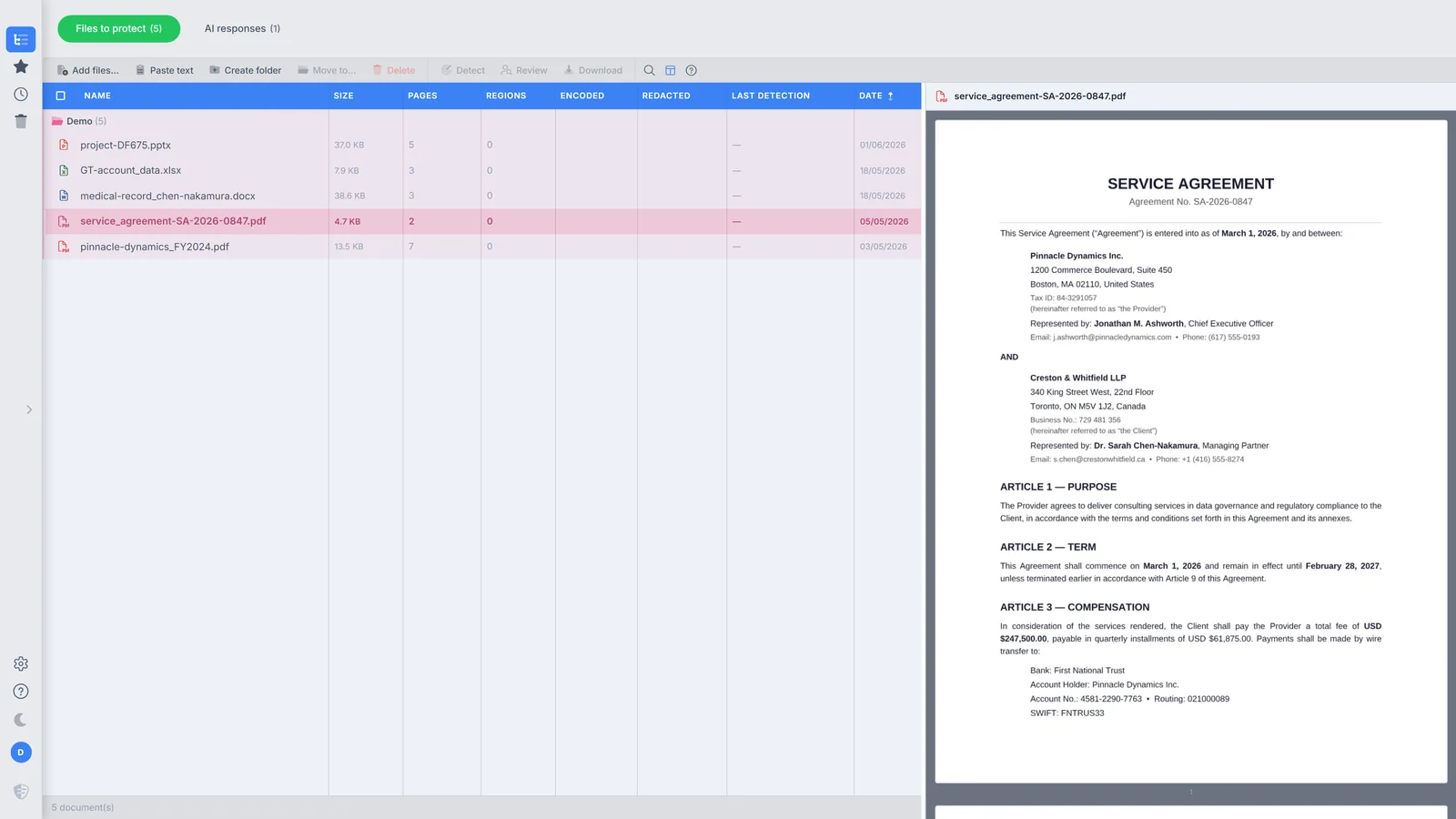
Anonymize a document before it reaches an AI model, then decode the answer, entirely offline.
- Period
- February 2026 – today
- Role
- Founder and lead developer: analysis, product design, code, billing, launch film
- Status
- In production
For
Lawyers, financial analysts and health professionals who handle confidential documents and want to use AI without breaking Law 25 or the GDPR.
The problem
People paste contracts and client files into chatbots every day, because the result is worth it. Under Québec’s Law 25 and the GDPR, that is a disclosure, and nobody keeps a record of it.
The redaction tools that existed were cloud services (the document leaves anyway), black boxes (nobody can say what was missed), or libraries built for developers. None of them gave the answer back with the real names in it.
What I did
- Analysed how professionals who handle confidential data actually use AI, and what compliance requires of them; designed the product from those rules.
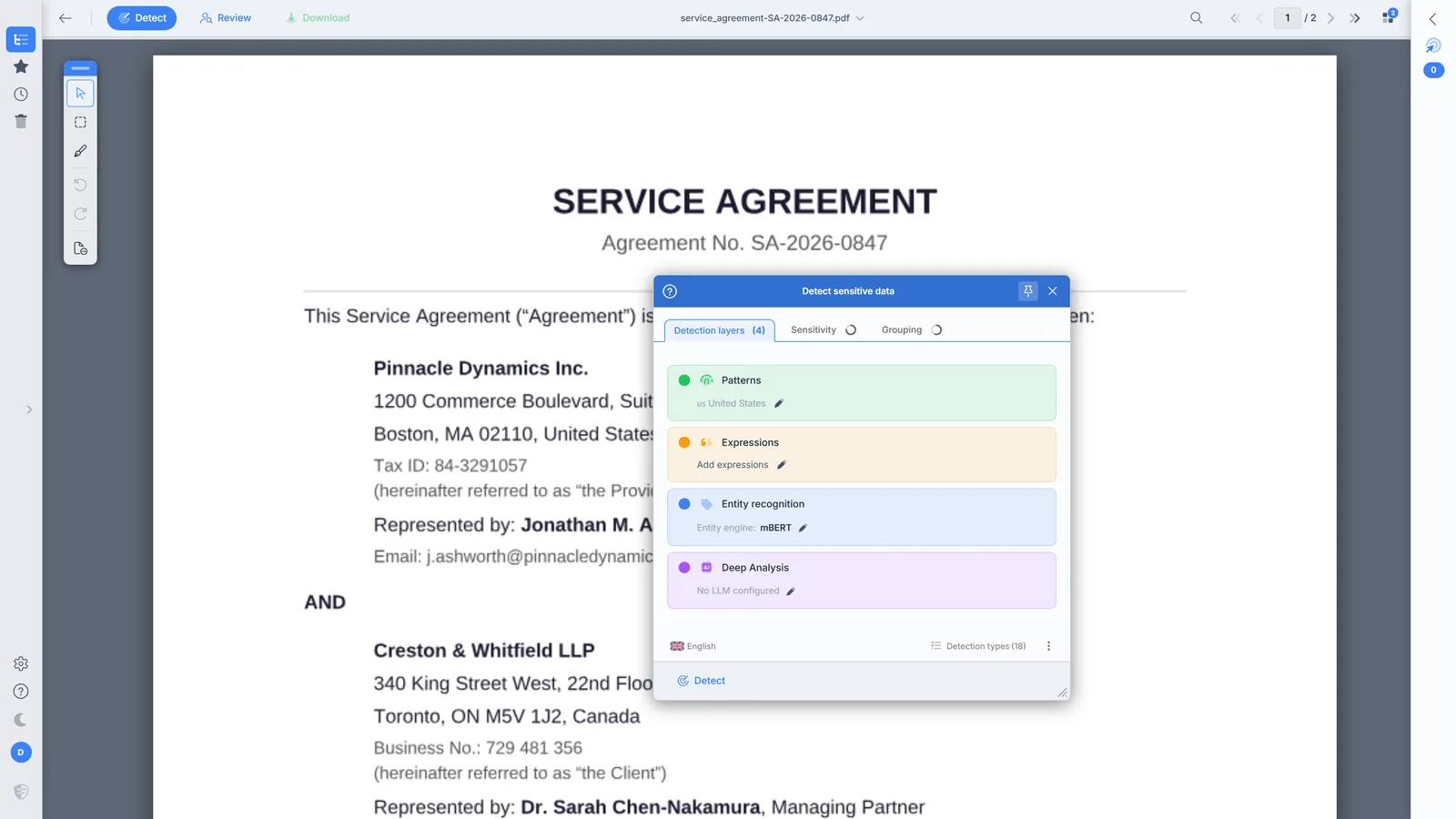
- Designed a four-layer detection pipeline (patterns, entity models, custom terms, an optional LLM pass) covering more than 70 identifier types, 17 countries and 8 languages.
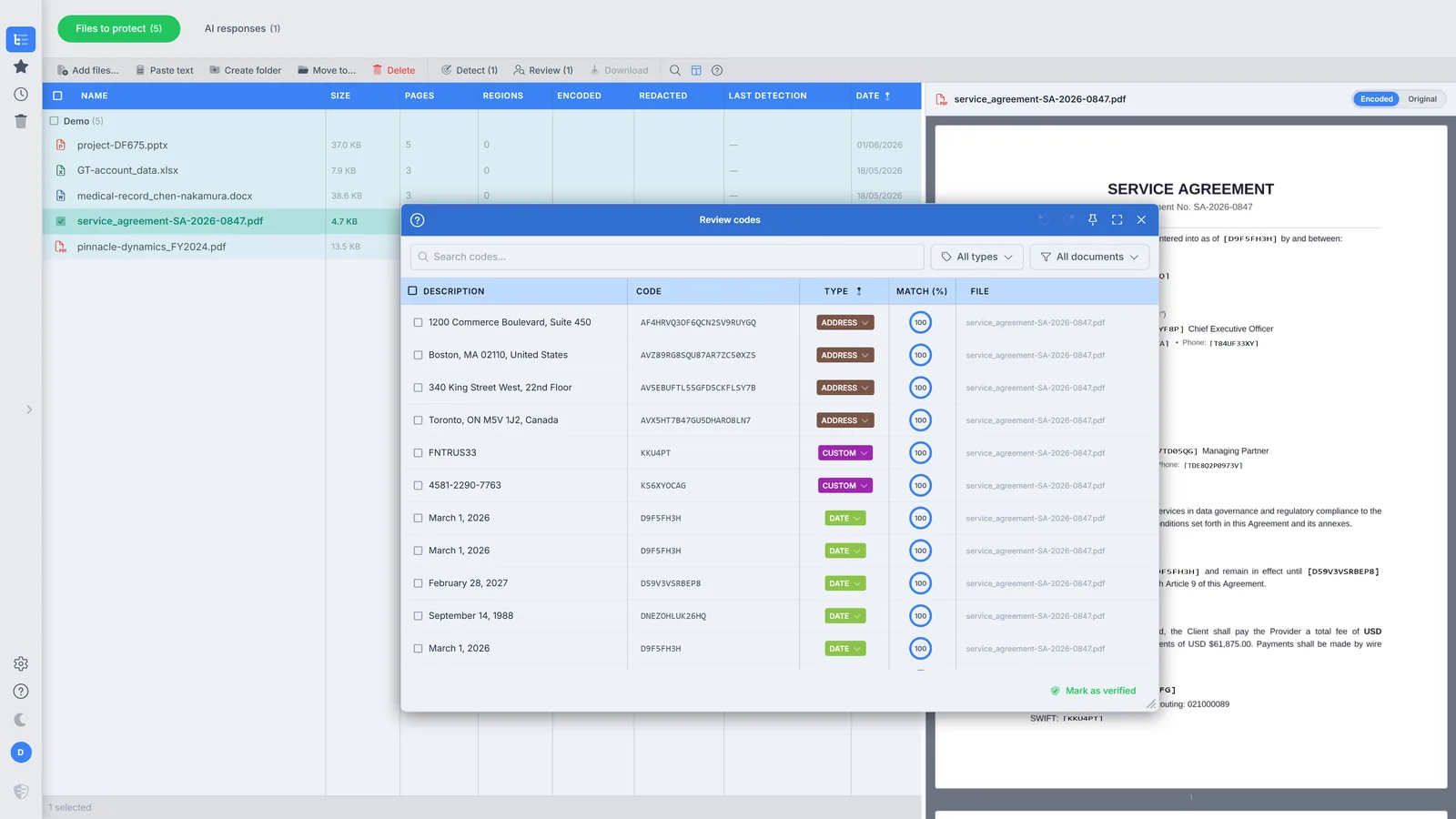
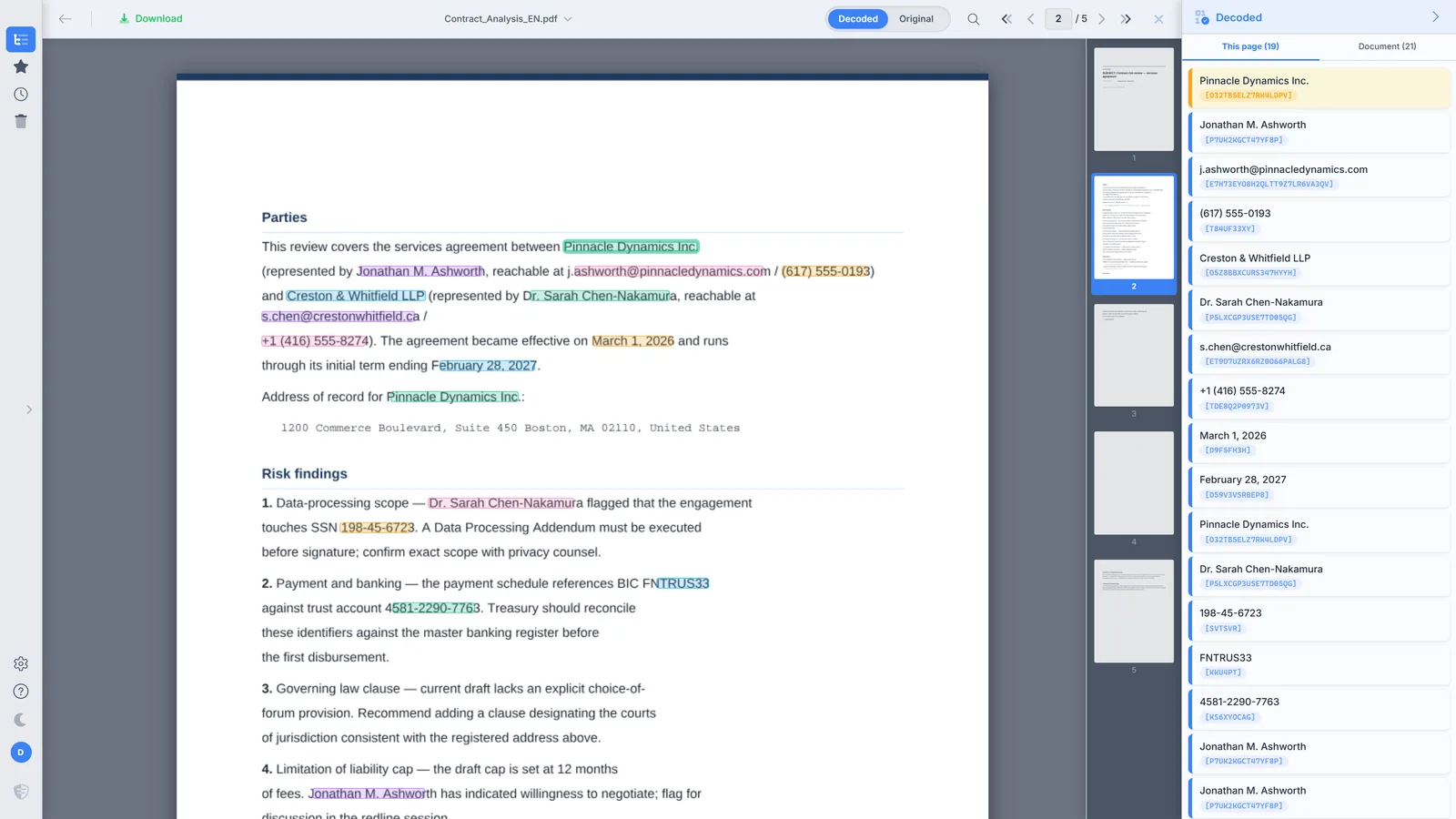
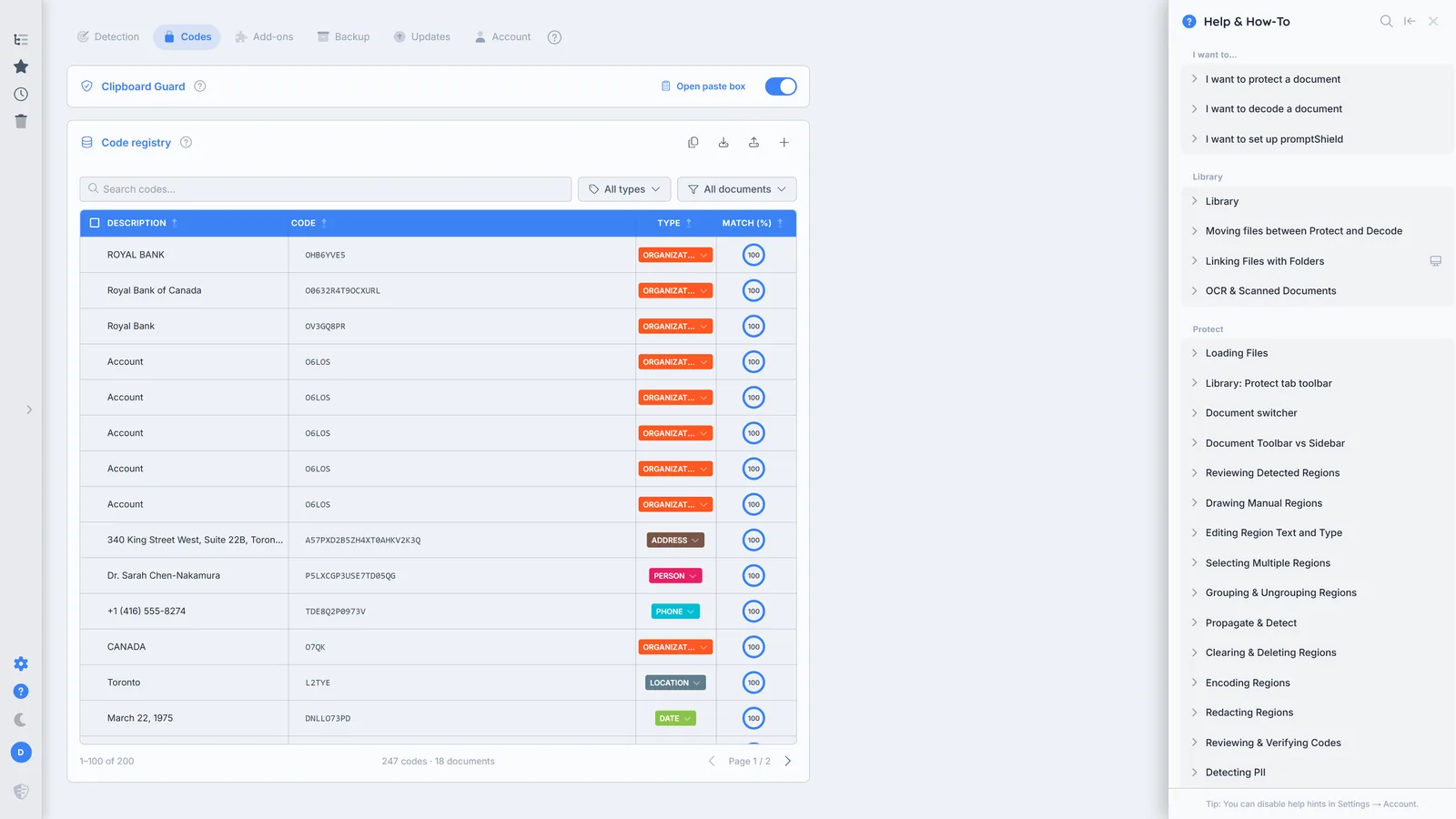
- Modelled a registry of reversible codes that stay consistent across linked files, so an AI answer about three documents can be decoded locally.
- Integrated Stripe billing: monthly plans, a weekly pass and a seven-day trial, synchronised by webhooks with licences and team seats.
- Shipped a desktop app, a CLI, a self-hosted REST API (Docker, OpenAPI), a Python SDK and browser extensions. Processing is 100% offline.
- Wrote and produced the launch film.
The decision that mattered
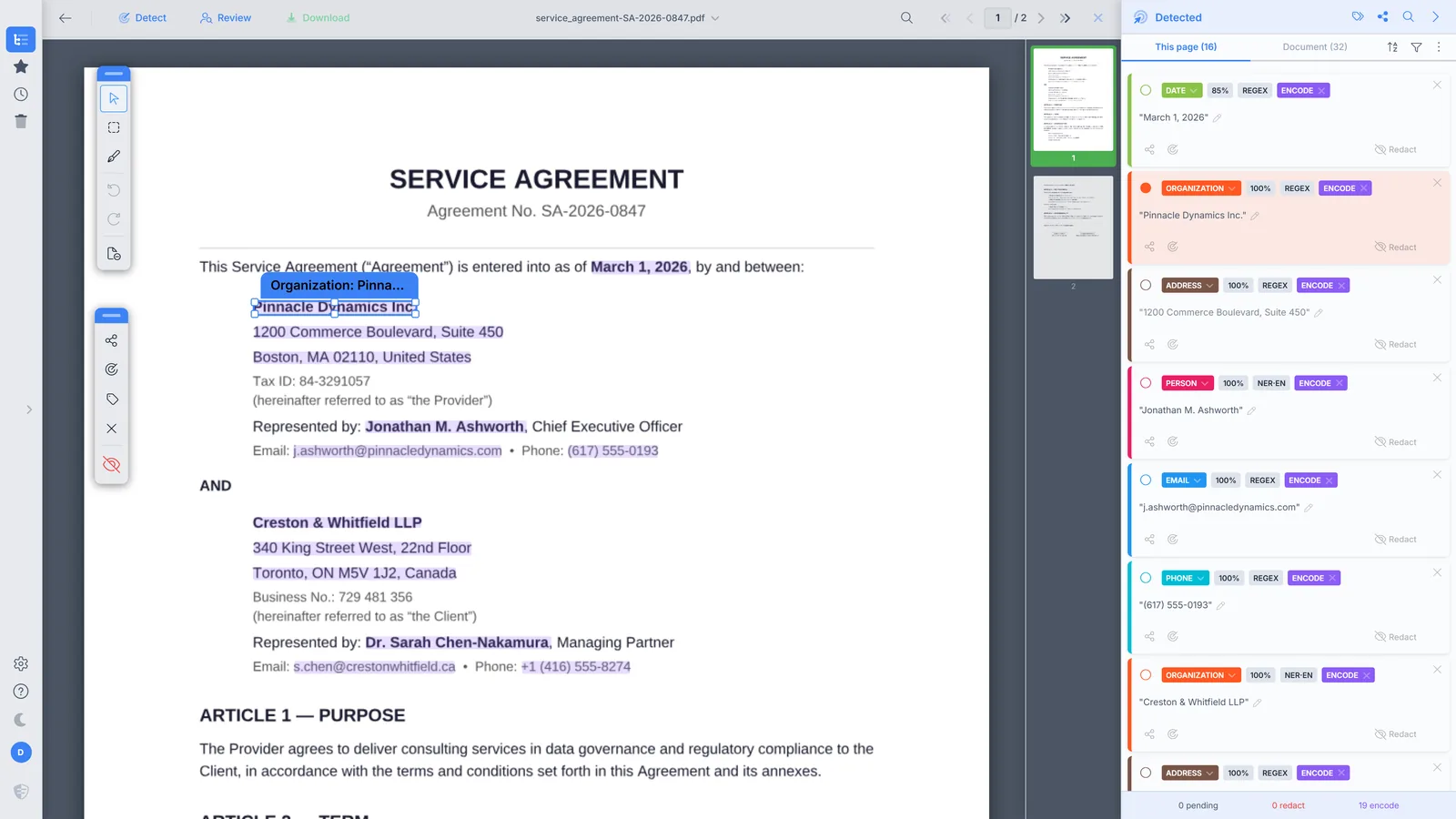
Every detection is shown, in place, before anything leaves the machine. A tool that silently redacts asks to be trusted; one that shows its work can be checked. For a lawyer, only the second is usable.
That is also why the engine is ours rather than an off-the-shelf library: we published a benchmark against Microsoft Presidio listing what each tool missed, including our own misses.
Screens